
International Scenario
The renewed tensions in the Middle East triggered a sharp increase in energy commodity prices, with significant gains in oil and gasoline. However, the inflationary shock has so far been smaller than initially expected. Food prices remain relatively stable, while iron ore prices have declined amid weakness in the Chinese economy.
In the United States, investment in artificial intelligence continues to support productivity, corporate earnings, and asset valuations. The economy is slowing moderately, but the labor market remains resilient. As a result, the Federal Reserve is not yet under significant pressure from a material deterioration in employment.
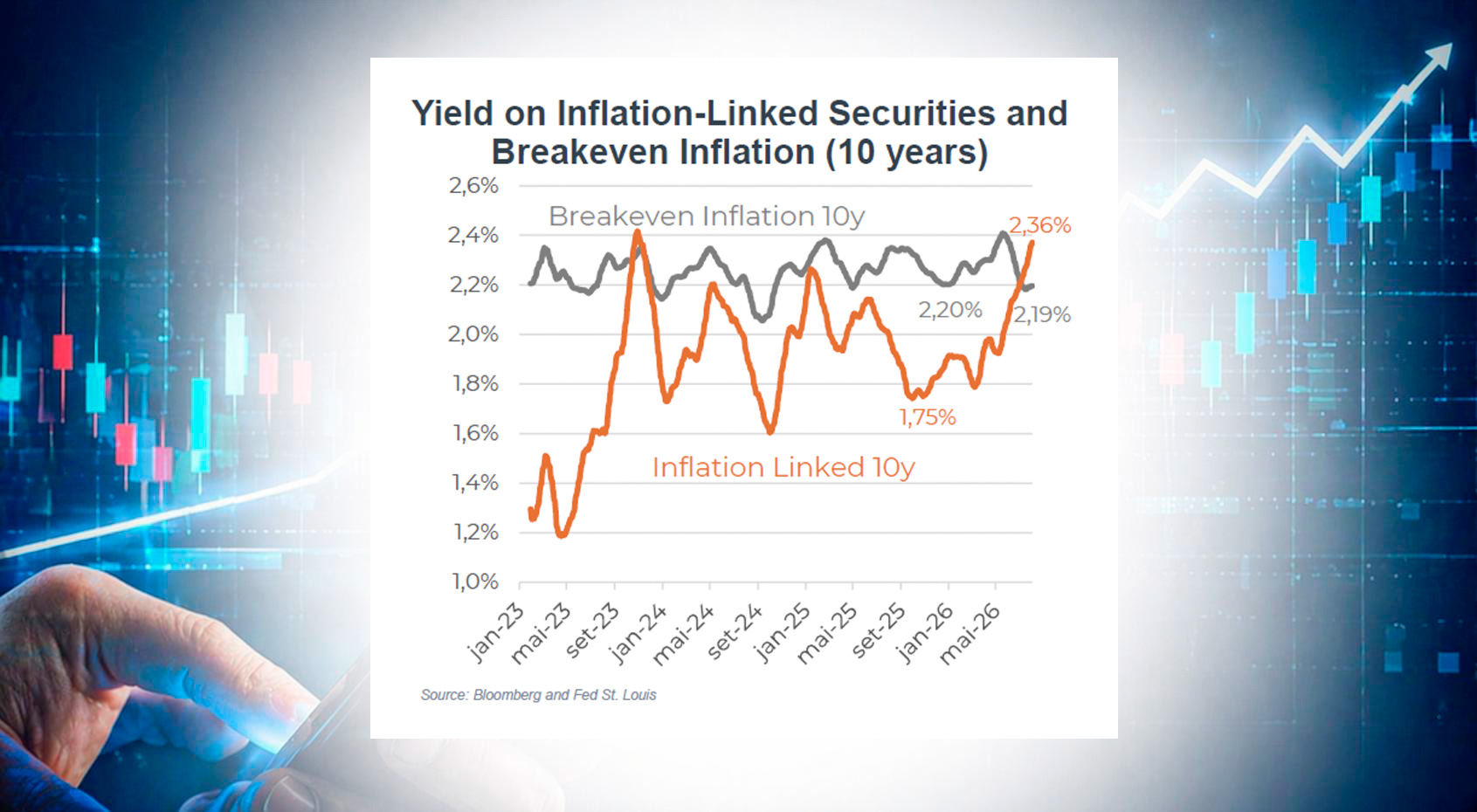
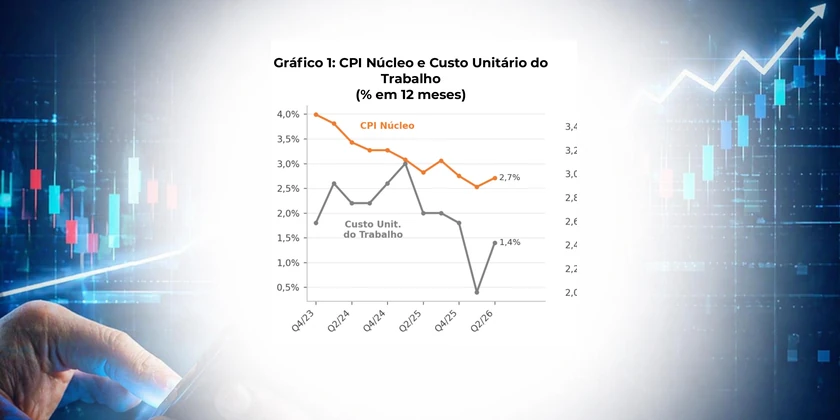
The main U.S. concern is the Federal Reserve’s credibility. Changes in communication and uncertainty about its reaction function have led the market to assign a higher probability to further interest-rate increases. The repricing has been concentrated mainly in real interest rates rather than inflation expectations. Although core inflation has declined, it remains above the target.
In the Eurozone, the European Central Bank has shown a greater willingness to respond to the inflationary effects of supply shocks. Even in an environment of weak growth and relatively low inflation, the presentation considers another interest-rate increase possible.
China is facing a structural slowdown, a real estate crisis, weak domestic demand, and inflation well below target. Economic growth has become increasingly dependent on exports, while the persistent decline in producer prices means that China is exporting deflationary pressures to the rest of the world.
Asian equity markets experienced profit-taking after strong gains earlier in the year. Japan is dealing with a weaker yen and the prospect of further interest-rate increases, while the South Korean stock market remains highly sensitive to the global semiconductor and artificial-intelligence cycle.
Brazilian Scenario
In Brazil, economic activity is slowing only gradually. GDP growth is expected to lose momentum over the next few years, a development viewed as necessary for inflation to converge toward the 3% target.
The economy is still operating above its potential, which reduces its ability to absorb external shocks, particularly those coming from oil prices and the exchange rate. At the same time, employment, wage income, and fiscal stimulus continue to support consumption in the short term.
High household indebtedness, elevated debt-service burdens, and high interest rates are expected to keep pressure on delinquency rates and borrowing costs. In the public sector, the continued increase in both gross and net debt is identified as a major source of concern.
The Copom faces a credibility challenge. Recent inflation readings that were better than expected have mitigated some of the negative impact of the communication surrounding its latest meeting. Even so, inflation expectations remain high because the market believes that the Central Bank and the Federal Government may do less than necessary to bring inflation back to target.
The projections presented indicate slower GDP growth, a gradual decline in inflation, and a slow reduction in the Selic rate. Gross public debt is expected to exceed 82% of GDP, while the exchange rate emerges as the key variable in the outlook: a deterioration in global risk appetite or in perceptions of Brazil’s fiscal risk could undermine the remaining projections.
Markets and Investment Strategy
High interest rates provide attractive carry and relatively inexpensive protection, making it difficult to outperform floating-rate fixed-income investments on a risk-adjusted basis.
Even so, the Ibovespa had accumulated a 10.5% gain for the year through early August, while the Brazilian real had appreciated by 7.2% against the U.S. dollar. The recommended strategy remains defensive, with more than 70% allocated to fixed income and more than 40% invested in floating-rate instruments.
Multimarket funds are losing ground in this environment, while equities should retain only a modest allocation because of their dependence on the electoral and fiscal outlook.
Main Risks
The key risks are:
- the impact of the elections on the exchange rate and on the cost of the future fiscal adjustment;
- global long-term interest rates remaining higher for longer;
- a new inflationary shock caused by geopolitical developments or climate events;
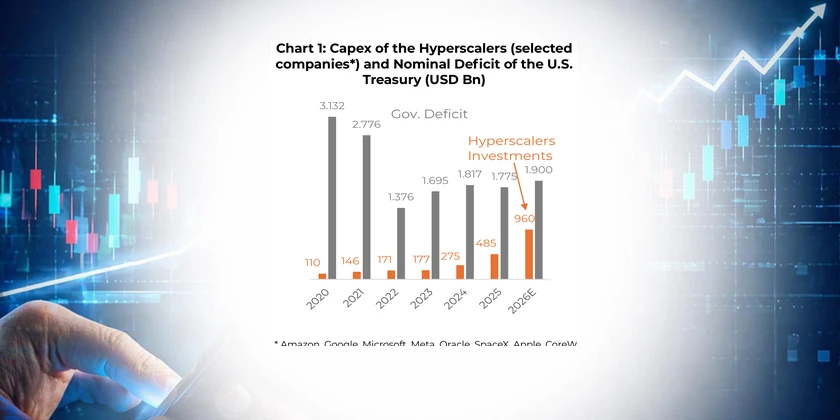
- excessive investment and investor positioning in artificial-intelligence-related assets;
- strong financing needs among major technology companies, putting pressure on credit spreads and U.S. Treasury yields.
Conclusion
Economic fundamentals remain relatively solid, but the environment has become more challenging because of global interest-rate repricing, uncertainty surrounding central-bank credibility, and Brazil’s fiscal and electoral risks.
In this context, the presentation favors a defensive positioning, with a high allocation to fixed income and only a moderate exposure to equities.



One Response