Author: Tatiana Pinheiro, PhD in Economics from FGV-EESP, Economic Researcher and Consultant
Published in AE Broadcast on August 28, 2026
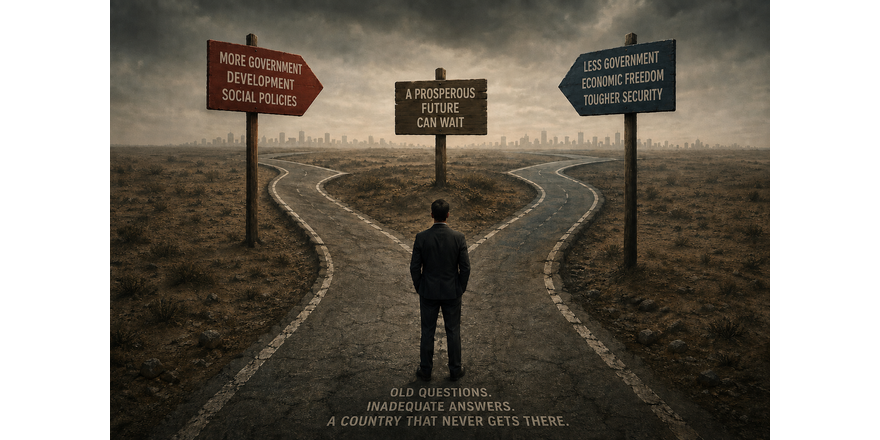
For the third consecutive election, Brazil is once again debating two competing visions for the country that, at their core, have been familiar since 2018. On one side, the Workers’ Party (PT) continues to see the state as a key driver of economic development. On the other, the Bolsonaro camp advocates a smaller state and a greater role for the private sector. The slogans and circumstances change, but the core of the debate remains largely the same.
There are, however, areas of convergence. The word “security” appears 52 times in the PT’s platform and 56 times in the Liberal Party’s (PL). This is no coincidence: according to a May Datafolha poll, 12% of respondents identified public security as a priority for the next president, behind healthcare and education.
Lula is running for reelection on a platform that is predominantly one of continuity. A proposal-by-proposal comparison across the past three elections indicates that roughly 70% of the policies presented in 2026 have substantive precedents in the PT’s 2018 or 2022 platforms. I classify as continuity proposals that share the same objective or basic policy mechanism, even when they have been rebranded, expanded, or reformulated. Investment, the public healthcare system (SUS), public education, real minimum wage gains, industrial policy, and the green transition are all longstanding priorities. Even newer policy brands have earlier roots: the New Growth Acceleration Program (Novo PAC) and New Industry Brazil (NIB) update previous infrastructure and reindustrialization agendas.
There are some new initiatives: the National Care Policy and Cuidotecas, the consolidation of the Pé-de-Meia student savings program, a unified electronic health record, and the use of AI in healthcare. On public security, the shift is more substantive, with a greater focus on combating organized crime, disrupting its financial networks, and strengthening coordination at the federal level.
The problem with continuity platforms is well known: incumbent governments tend to provide considerable detail on their achievements, but rarely translate past shortcomings into proposals for corrective action. Lula highlights the fiscal framework, tax reform, NIB, and the PAC among his administration’s achievements. But the platform is far less specific on how to stabilize public debt if growth and revenues disappoint, or on how to address rigidities in government spending. There is little room for self-criticism.
Flávio Bolsonaro takes the opposite approach. His platform includes a larger number of distinct proposals and new policy brands. Using the same methodology, approximately half of the 2026 proposals have roots in Jair Bolsonaro’s 2018 or 2022 platforms. The continuity lies in the economic and ideological core: a smaller state, fiscal discipline, economic freedom, and a tougher stance on crime. Here, too, there is little self-criticism: the commitment to fiscal discipline comes without a discussion of the abandonment of the spending cap or the postponement of court-ordered payments (precatórios) during the Bolsonaro administration.
New branding, however, does not necessarily mean new policy. “Tesouraço” repackages the 2018 agenda of reducing the size of the state; “Brasil sem Fila” takes the 2022 digitalization of public services agenda further; while concessions, deregulation, and economic freedom have featured in all three elections.
What is new are some of the policy instruments: ending presidential reelection, revisiting the tax reform, reforming the judiciary, Muralha Brasileira, Banco da Prosperidade, new policies for energy and critical minerals, as well as Central da Mulher, ClarIA, and childcare vouchers.
Flávio also leaves important questions unanswered. He promises to cut taxes, deliver fiscal surpluses, stabilize public debt, and eventually bring the debt ratio down, but does not quantify the savings from Tesouraço or demonstrate whether the proposed spending cuts would be sufficient. The lack of quantification also echoes 2018, when sales of federal government real estate were presented as an important tool for reducing public debt. Public security is where the biggest shift has occurred: Jair Bolsonaro’s more managerial approach in 2022 has given way to proposals to lower the age of criminal responsibility, increase criminal penalties, expand prison capacity, and deploy facial recognition technology on a large scale, without estimates of their potential impact on crime.
Incumbents present their track record as a reason for continuity; challengers need to convince voters that change is necessary. In 2022, Bolsonaro was the incumbent and campaigned on continuity, while Lula, in opposition, offered reconstruction. In 2026, Lula is promising to deepen the policies of his current administration, while Flávio is offering a broader agenda for change.
Despite their differences, however, the two platforms share the same weakness: both lack more robust proposals to improve the governance of public spending, including systematic policy reviews and cost-benefit assessments, as well as a quantification of the measures needed to ensure fiscal sustainability.
Behind the new policy brands, Brazil is still debating many of the same issues that divided public opinion in 2018: the size of the state, whether investment should be led by the public or private sector, the balance between fiscal responsibility and social policies, and prevention versus enforcement in public security. Meanwhile, a more prosperous future will have to wait.