US: Inflation Is Not Rising, but Remains High and Far from Target

Download File
Reading time: 2 minutes
Tempo de leitura: 2 minutos
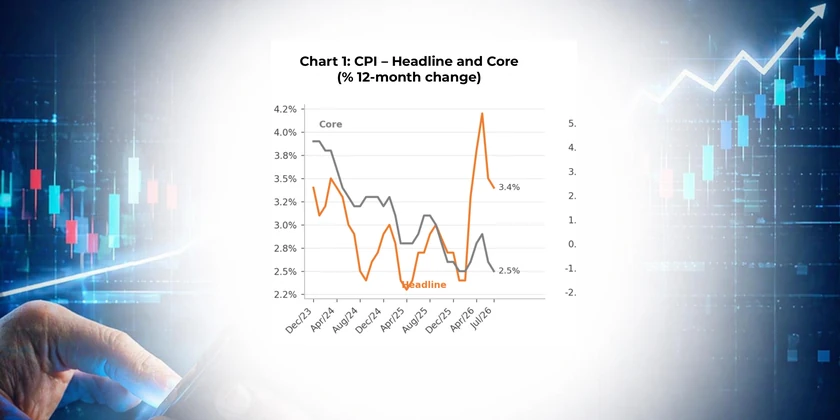
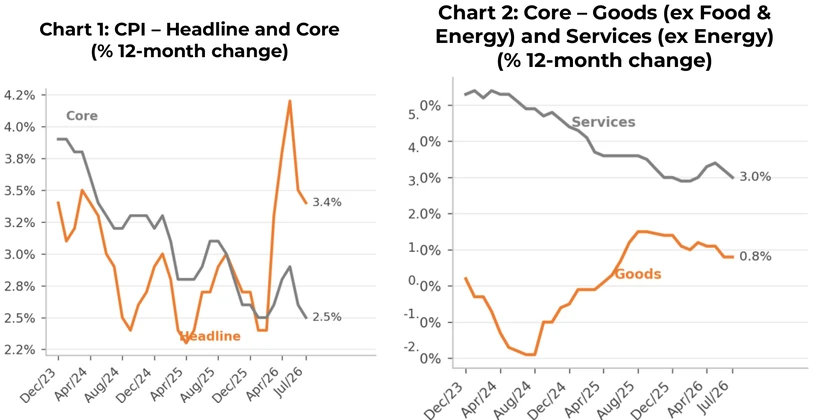
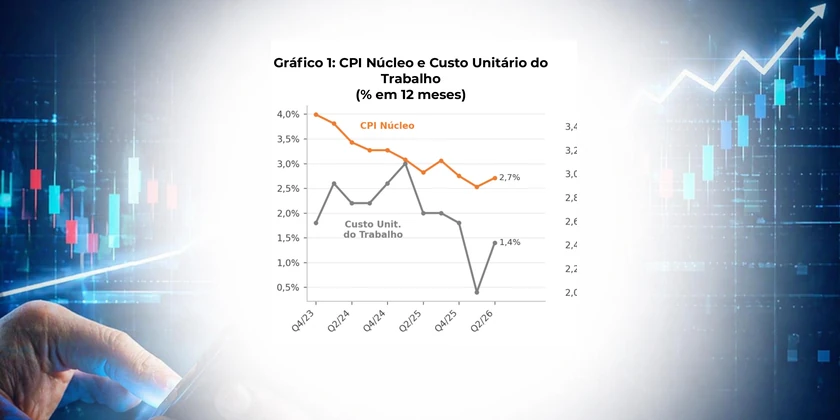
  • The Consumer Price Index (CPI) rose 0.1% in July (seasonally adjusted), after falling 0.4% in June, and decelerated to 3.4% over 12 months (from 3.5%). The core index — which excludes food and energy — advanced 0.2% on the month and eased to 2.5% over 12 months, extending the disinflation trend (See Chart 1).
  • The composition, however, shows opposing forces: core services (ex energy) slowed to 3.0% over 12 months — down from more than 5% at the end of 2023 — while core goods have turned from deflation to a 0.8% increase, reflecting the pass-through of import tariffs (See Chart 2).
  • Shelter rose just 0.1% on the month (accounting for roughly two-thirds of the index’s monthly increase) and is up 3.2% over 12 months. The gradual cooling in rents remains the main anchor of core disinflation.
  • Energy fell 1.5% on the month, with gasoline down 2.9%, still cushioning the headline index — though it is up 14.7% over 12 months. Food rose 0.1% on the month (3.0% over the year). Airline fares stood out, jumping 2.2% on the month and 25.5% over 12 months.
  • The reflation in goods is the point to watch: items that were in deflation through 2024 have returned to positive territory, a counterweight to services disinflation and a sign that tariff effects keep working their way through the price chain.
  • For monetary policy, the picture was not bad: the indicators show no acceleration. But markets should keep pricing in rate increases to the extent that inflation persists far from the target.
Leave a Reply

Your email address will not be published. Required fields are marked *

The hidden game of the market that few dare to expose.

Discover how influence and manipulation shape decisions every day — and learn to see what most overlook.

Newsletter Market Cruncher

Get strategic market insights delivered straight to your inbox.

Stay Informed

Related Articles

US: Resilient Productivity and Contained Labor Costs Support Disinflation

Nonfarm business labor productivity (output per hour) rose 1.4% at an annualized rate in the second quarter of 2026 and 2.2% from the same quarter a year earlier (See Chart 2). The result combines a 1.7% increase in output with a mere 0.3% rise in hours worked.

A Prosperous Future Will Have to Wait

For the third consecutive election, Brazil is once again debating two competing visions for the country that, at their core, have been familiar since 2018. On one side, the Workers’ Party (PT) continues to see the state as a key driver of economic development. On the other, the Bolsonaro camp advocates a smaller state and a greater role for the private sector. The slogans and circumstances change, but the core of the debate remains largely the same.

Hyperscalers: How Much Is Too Much?

Just 10 of the most relevant companies among the so-called hyperscalers in the United States are set to invest close to a total of USD 1 trillion in 2026, up from a mere USD 100 billion in 2020 (chart 1).

Newsletter Market Cruncher

Receive strategic market insights directly to your email.

Market Cruncher uses your contact information to send you relevant content.
You can unsubscribe at any time.