Pezco’s September edition of the Economic Scenario (Monthly Analysis) has three topics in focus: inflation (world and Brazil), activity (Brazil’s GDP) and debt (United States and Brazil).
Inflation and oil
Oil is back above US$ 100 per barrel, pressured by Middle East tensions and Chinese demand, reigniting near-term inflation risk. In the United States, markets already price in more than an 80% probability of up to two rate hikes by the end of 2026; in Europe, a rise of more than 180% in natural-gas prices keeps upward pressure on rates. In Brazil, the government responded in the short term: it cut the PIS/Cofins on gasoline, zeroed taxes on ethanol and created a diesel subsidy.
Inflation in Brazil
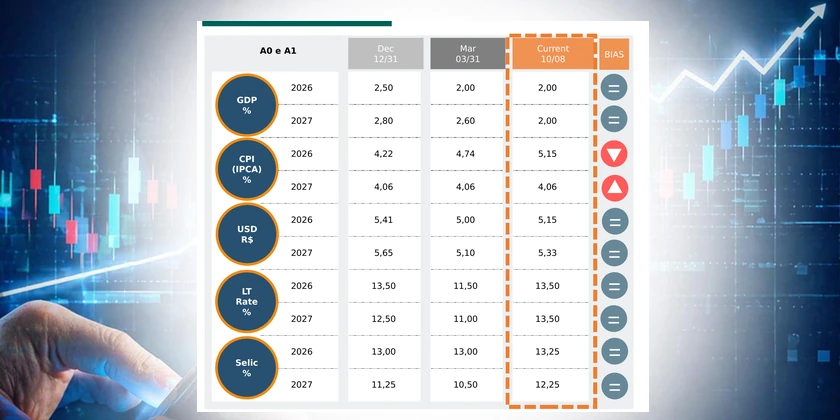
The IPCA posted deflation of 0.32% in August, helped by the Itaipu bonus on electricity bills and by declines in airfares, fuels and food. As a result, the chance of the IPCA running below 5% in 2026 has risen, as has the chance of the Central Bank keeping 25-basis-point Selic cuts through year-end. For 2027 and beyond, however, risks remain elevated — fiscal, oil and El Niño.
Activity
GDP decelerated to 0.5% in the second quarter, from 1.1% in the first. Domestic demand is losing steam more sharply: household consumption and investment (GFCF) fell more than GDP, while exports and externally exposed sectors are cushioning activity. Our reading of factor-utilization gaps suggests the output gap has closed, reflecting weaker demand more than a broad-based productivity gain.
Debt
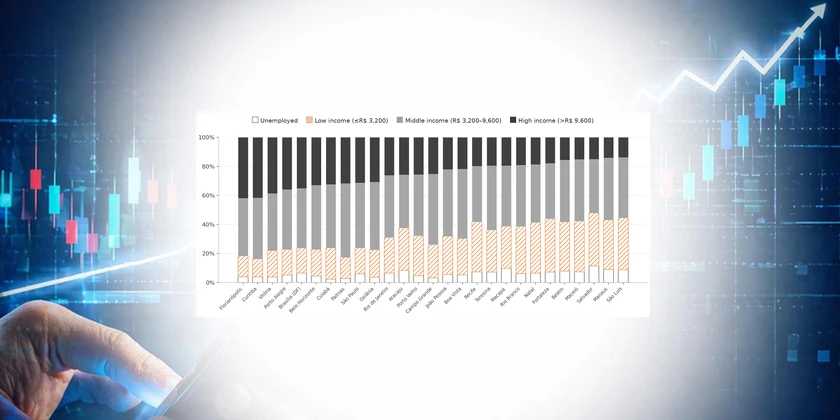
Total U.S. debt already exceeds 2.5 times GDP (257% in the first quarter of 2026), driven by the federal government. Brazil owes less across all three profiles (broad credit of 162.3% of GDP), but the problem is the cost: in household credit the stock is low and debt service is high — the monthly payment no longer fits the average family’s budget.
Rates and politics
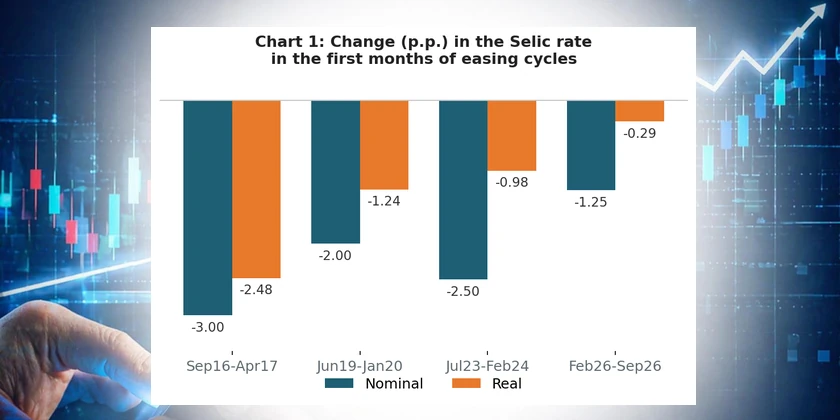
With the ex-ante real rate above 8% for nearly two years, monetary policy remains restrictive and credit events (judicial recovery filings and rating downgrades) are drawing attention. On the political front, polls show a narrowing of Lula’s runoff margin over Flávio Bolsonaro across all three surveys — a move that has lifted Brazilian assets.
The full presentation (22 slides) is available for download.