The report analyzes the economic and financial environment for the week of May 18–22, 2026, highlighting the combination of high inflation, geopolitical tensions, and rising political risk in Brazil. In the United States, consumer inflation reached 3.8% over 12 months, mainly driven by higher energy and fuel prices, increasing expectations that the Federal Reserve may keep interest rates elevated. In China, inflation also accelerated while trade tensions between the U.S. and China remained unresolved.
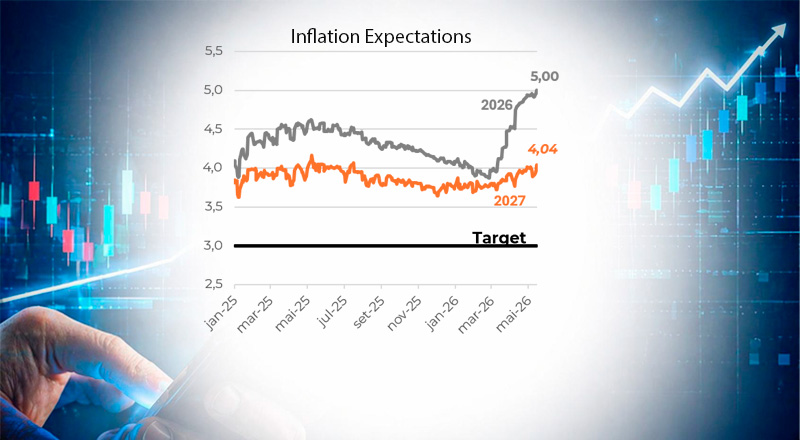
In Brazil, the report points to worsening fiscal expectations and increased political risk perception following events related to the electoral scenario, resulting in a decline in the Ibovespa stock index, depreciation of the Brazilian real, and higher future interest rates. Despite this, foreign exchange flows and external fundamentals remain relatively solid. Brazilian inflation, measured by the IPCA, reached 4.39% over 12 months, mainly pressured by food and healthcare prices.
The document also highlights the strong volatility in commodities, with Brent oil posting gains of more than 79% year-to-date, alongside a sharp rise in natural gas prices. Higher energy and agricultural costs, intensified by tensions surrounding the Strait of Hormuz, have increased global inflationary risks. Among the sectors analyzed, the report discusses the impacts of Brazil’s tax reform, the rapid growth of electric and hybrid vehicles in the country, and recent changes in the taxation of international purchases.