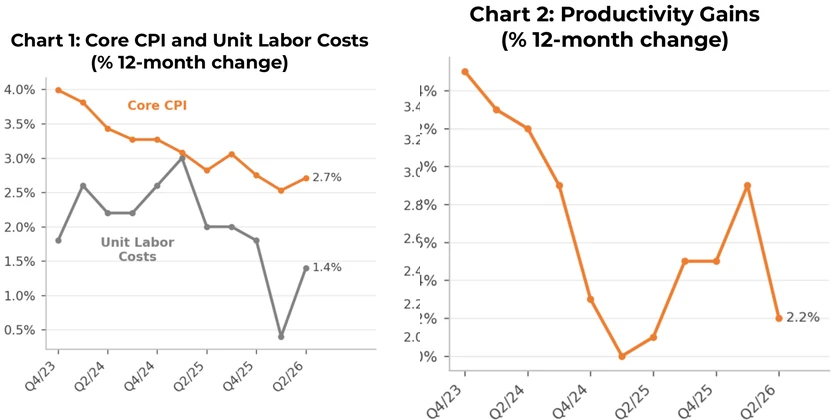
- Nonfarm business labor productivity (output per hour) rose 1.4% at an annualized rate in the second quarter of 2026 and 2.2% from the same quarter a year earlier (See Chart 2). The result combines a 1.7% increase in output with a mere 0.3% rise in hours worked.
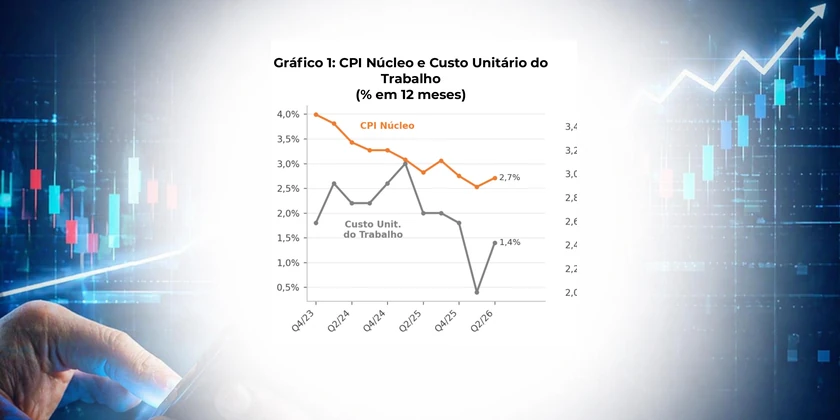
- Unit labor costs (ULC) rose just 1.3% annualized in the quarter and 1.4% over 12 months — a benign pace that helps explain the ongoing disinflation in core CPI (See Chart 1).
- Hourly compensation advanced 2.7% annualized, but in real terms fell 3.1% in the quarter, reflecting the period’s still-resilient inflation. With productivity growing in line with hourly pay, cost pressure on prices remains contained.
- First-quarter data were revised favorably: productivity was raised 0.5 p.p. to 0.8%, and unit labor costs were cut 0.5 p.p. to 1.3% — reinforcing the picture of well-behaved costs.
- In manufacturing, productivity rose 1.9% in the quarter, with durable goods (+2.7%) ahead of nondurables (+2.0%), a sign that efficiency gains are not confined to services.
- The structural highlight: productivity is growing 2.1% per year in the current cycle (since Q4 2019), above the previous cycle’s 1.5%. If sustained, this gain lifts the economy’s potential growth and gives the Fed more room to cut rates without rekindling inflation.