Inflation Won’t Fall Anytime Soon

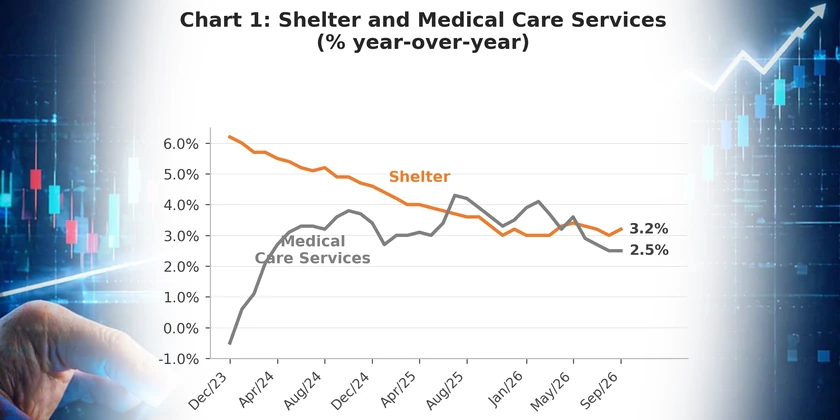
Chart: Shelter and Medical Care Services (% year-over-year)
Download File
Reading time: 2 minutes
Tempo de leitura: 2 minutos
  • The labor market is not slack, which suggests that services inflation will remain resilient. The shelter group is starting to be affected by imputed rents (Chart 1), which depend more on interest rates than on the housing market. Energy will stay under pressure from oil. In other words, even if there is a truce in Iran, it will take time for inflation to come down in the United States.
  • The consumer price index (CPI) rose 0.6% in September (seasonally adjusted) and the 12-month change accelerated to 3.7% (from 3.4%). Core — which excludes food and energy — advanced 0.3% in the month and 2.6% over 12 months, a slight increase from August.
  • The acceleration in the headline index is, above all, an energy phenomenon: gasoline rose 9.1% in the month (accounting for more than half of the monthly increase) and is up 34.2% over 12 months, while fuel oil jumped 74.2% in the year. The energy group advanced 5.2% in the month and 20.4% over 12 months.
  • On the core side, services remain resilient: the measure that excludes energy prices (over 12 months) came in at 3.1% through September (see Chart 2). The two largest services components are still strong: shelter at 3.2% and medical care services at 2.5% in the year-over-year change.
  • Other highlights of the month: airfares +1.2% (22.4% over 12 months), used cars +0.7% and hospital services +0.7%; going the other way, medicinal drugs fell 1.2% and communication 0.2%. Food was stable in the month (2.5% in the year, with declines in meat and milk).
  • For monetary policy, the rise in core is a problem. The level remains elevated and the outlook is for inflation to persist for some time, reinforcing the scenario of one or two more rate hikes in 2026.
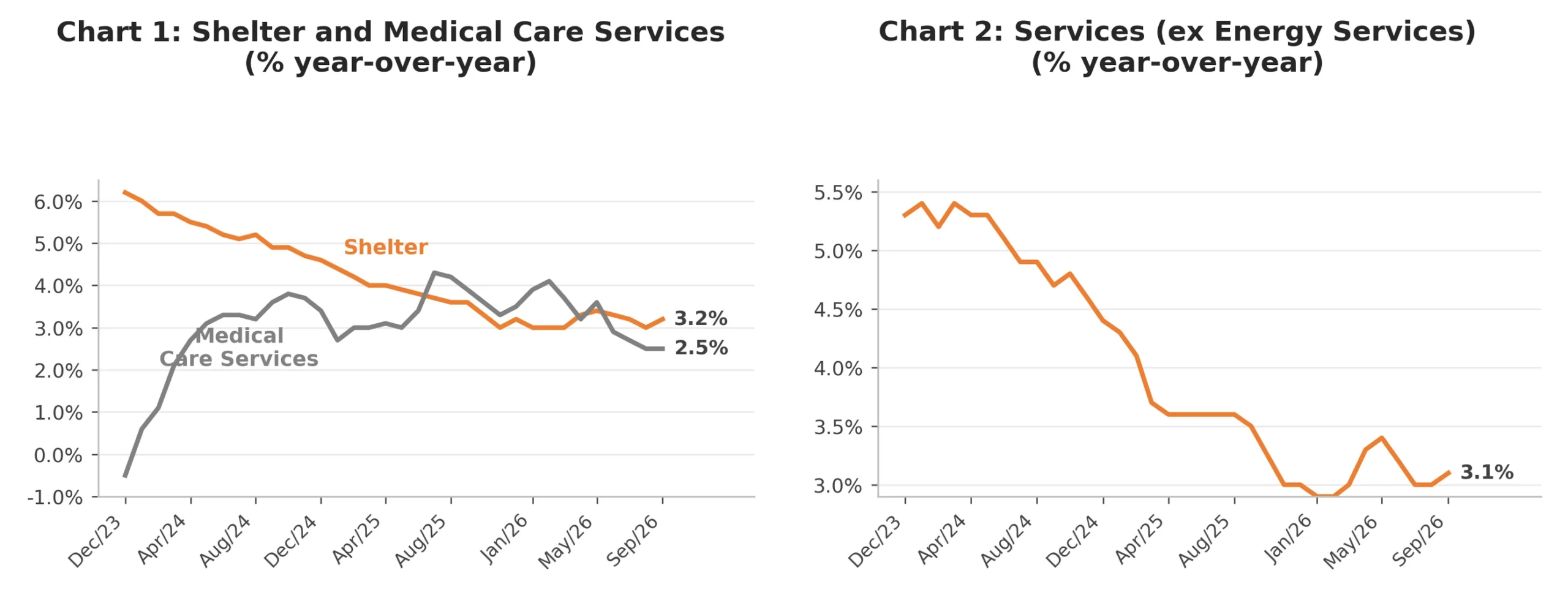
Chart 1: Shelter and Medical Care Services; Chart 2: Services ex energy (% year-over-year)

Leave a Reply

Your email address will not be published. Required fields are marked *

The hidden game of the market that few dare to expose.

Discover how influence and manipulation shape decisions every day — and learn to see what most overlook.

Newsletter Market Cruncher

Get strategic market insights delivered straight to your inbox.

Stay Informed

Related Articles

2027 Will Be a Very Difficult Year

The slowdown in domestic demand is already under way and tends to deepen in 2027. Cyclical sectors, credit, interest rates, the fiscal adjustment and the labor market all point to much weaker domestic demand next year.

The Fiscal Abyss and the Subprime of Interest Rates

The combination of high public debt and high interest rates, prevalent across major economies, tends to raise the probability of financial instability. The risk lies not only in public indebtedness itself, but in who finances those securities, with how much leverage and under what collateral conditions. That is what the IMF pointed to in its latest Financial Stability Report.

Employment and Income Across States and Municipalities: A Snapshot

Brazil's national employment and income statistics conceal enormous regional inequality: states and capitals live with very different realities of employment, income, and informality — which reinforces the importance of programs such as Bolsa Família precisely where poverty is greatest.

Newsletter Market Cruncher

Receive strategic market insights directly to your email.

Market Cruncher uses your contact information to send you relevant content.
You can unsubscribe at any time.