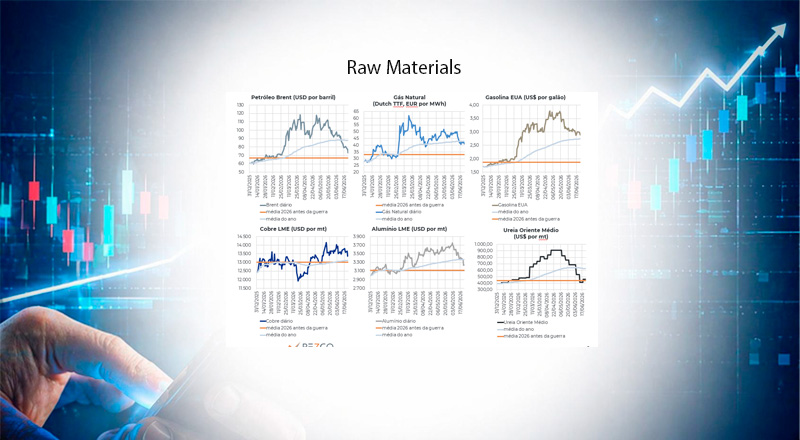
The macroeconomic environment remains characterized by elevated uncertainty, although some of the main short-term inflationary risks have eased. The reopening of the Strait of Hormuz has significantly reduced the risk of a further escalation in oil and other commodity prices, contributing to a potentially more favorable global inflation outlook. Nevertheless, expectations of higher interest rates in the world’s major economies—particularly in the United States—continue to shape global financial markets and weigh on emerging market assets.
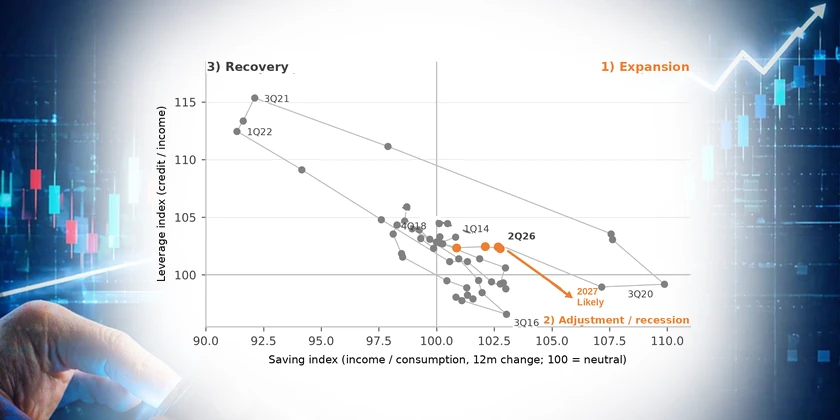
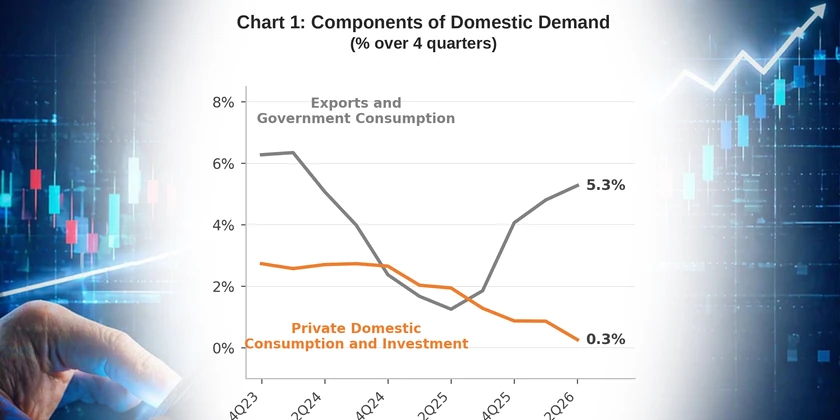
In Brazil, the combination of higher global interest rates, recent foreign capital outflows from the equity market, and rising political uncertainty has put domestic financial assets under pressure, resulting in higher market interest rates, a weaker Brazilian real, and increased stock market volatility. While the baseline macroeconomic projections remain broadly unchanged, the balance of risks has deteriorated, primarily due to the approaching 2026 presidential election and lingering concerns over the country’s fiscal trajectory.
The recent decline in oil and industrial input prices may contribute to a gradual disinflationary process over the coming months, particularly in advanced economies. However, this trend will depend on the evolution of supply conditions and could be partially offset by temporary factors, including demand related to the FIFA World Cup and continued inflation in the services sector. In the United States, markets have increasingly priced in the possibility of higher policy rates, reflecting persistent inflationary pressures and continued labor market resilience.
In Brazil, domestic interest rates remain elevated as a result of both the international environment and concerns that fiscal adjustment may prove insufficient. Opinion polls suggest that the 2026 presidential election is likely to be highly competitive, implying that political uncertainty may remain elevated throughout much of the coming year. As a result, the performance of the exchange rate, interest rates, and other Brazilian assets will increasingly depend on investors’ confidence in the next administration’s commitment to fiscal discipline.
From a longer-term perspective, however, Brazil continues to enjoy favorable structural fundamentals. Global demand for food, natural resources, and energy, combined with the technological transformation driven by artificial intelligence and the ongoing reconfiguration of the geopolitical landscape, creates significant opportunities for the country. Realizing this potential, however, will require a credible fiscal agenda capable of reducing the cost of capital, encouraging investment, and supporting stronger long-term economic growth.